
Bovine Theileriosis
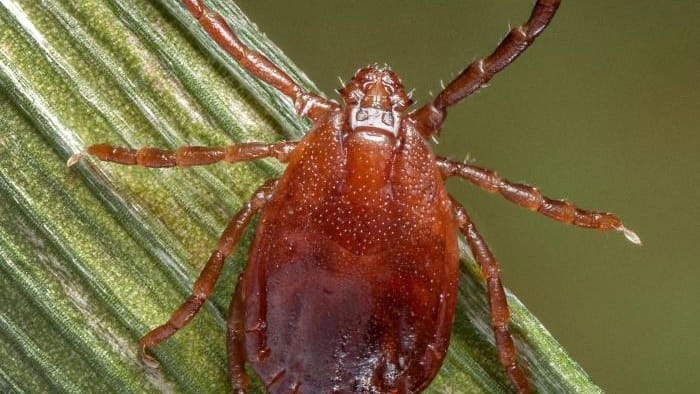
Bovine Theileriosis and Asian Longhorned Tick
There is a new disease in cattle in the United States which is poised to become one of the most economically significant disease for cattle producers as currently there is no vaccine or treatment. The disease is called Bovine Theileriosis and it is a blood-borne disease caused by a protozoan parasite called Theileria orientalis Ikeda. The disease is transmitted by the Asian longhorned tick, Haemaphysalis longicorni.
Since its U.S. detection in 2017, Asian longhorned ticks (ALT) have been confirmed in at least 19 states including Arkansas, Connecticut, Delaware, Georgia, Indiana, Kentucky, Massachusetts, Maryland, Missouri, North Carolina, New Jersey, New York, Ohio, Pennsylvania, Rhode Island, South Carolina, Tennessee, Virginia, and West Virginia. This species of tick and Theileriosis has not been detected in Mississippi as of April 2026.
ALT Biology and Identification
The Asian longhorned tick is unique in that it can reproduce asexually without mating with a male- basically female clones (parthenogenesis). ALT can produce multiple generations in one year, whereas native ticks in Mississippi require two to three years to complete a life cycle.
After feeding on an animal such as a cow, the tick can produce many eggs (up to 2000). All viable eggs will develop into females. No males are produced. This type of reproduction allows ALT populations to reach very high densities. ALTs are three-host ticks with four life stages – eggs, larvae, nymphs and adults. Each of the feeding stages (larvae, nymphs and adults) will feed on a different host. The three hosts could be animals like deer, raccoons, coyotes and birds which could allow the tick to spread across the southeastern US at a rapid pace. After larvae and nymphs feed, they drop off the host and molt into the next stage. Females that completely engorge will drop off the host and lay eggs and then die.
Because the Asian longhorned tick can reproduce so quickly, large populations of ticks on animals can cause severe health problems such as reduced growth, weight loss, anemia, hide damage, abortion and death in extreme cases, death (due to numerous ticks sucking so much blood from the animal.
Producers are encouraged to check their cattle for ticks and be alert for animals that have large populations of ticks since the ALT can reproduce without a male and one female lays about 2000 eggs. Ticks are commonly found in the ears, under the tail area, between the hind legs, and in udder skin folds.
ALTs are reddish brown ticks, void of markings, and possess short, blunt mouthparts. Adults are about 1/10 of an inch in size. ALTs are similar in size to blacklegged (deer) ticks but smaller than some of our other native ticks.
Bovine Theileriosis
There are several types of Theileria orientalis found in the United States; however, to date, only T. orientalis Ikeda has been shown to cause severe illness in animals. The disease spreads when ticks acquire the protozoa while feeding on infected animals and later transmit the parasite to other animals through their saliva. Mechanical transmission can happen through blood-contaminated equipment — including needles, dehorning, castration and tagging equipment. Vertical transmission can occur from an infected cow to her calf. It’s estimated this happens in about 10% of the animals.
Symptoms in cattle are very similar to the symptoms of anaplasmosis which is an infection with the bacteria, Anaplasma marginale. A key difference between anaplasmosis and theileriosis is that theileriosis can cause symptoms in cattle of any age whereas anaplasmosis symptoms and illness occur in older cattle. The parasite affects the red blood cells, so animals will have difficulty breathing and will be off feed. Infected cattle will be lethargic, feverish, anemic and have pale membranes. Pregnant cattle can abort. T. orientalis Ikeda infections have been reported to cause mortality in an average of 1- 5% of infected cattle but can be as high as 50%. Pregnant heifers and calves are particularly susceptible to the infection. Once infected, cattle can be lifetime carriers.
Theileria was first detected in Missouri in June 2023 with a positive case in a southern county. As of January 2026, the disease has spread to 59 of the 114 Missouri counties. Since Asian longhorned ticks can transmit the blood parasite, producers are advised to check cattle for the ticks and use tick control products.
Theileria prevention and control
There is no approved U.S. treatment for Bovine theileriosis or a vaccine to prevent the disease. Injectable tetracyclines, which are effective in treating Anaplasmosis, have no effect on animals infected with T. orientalis Ikeda. Animals that recover from anemic episodes remain carriers for life and can be a source of infection to herd mates through ways such as shared needles used at cattle processing and ticks feeding. Supportive care and reducing stress and handling help sick animals recover.
A notable difference between animals infected with bovine theileriosis compared to Anaplasmosis is that young animals can show symptoms that resemble Anaplasmosis. Cattle producers may think that stocker cattle have bovine respiratory disease if they have labored breathing and are pale, when in reality the animal could be infected with T. orientalis. A blood test is required to obtain a diagnosis, so producers are encouraged to contact a veterinarian to obtain samples to diagnose the disease.
Best management practices to prevent Asian longhorned ticks and bovine Theileriosis
Because ALT and bovine theileriosis have not been in the US for a long time, more research is needed to combat the tick and the protozoan parasite it carries. Cattle producers can follow these steps to reduce tick populations and the incidence of the disease:
- Maintain a tick control program and vegetation (bush hogging) control program
- Practice heightened biosecurity – Closely check the health and tick status of all animals before and after herd introduction
- Use a clean needle for each animal and disinfect surgical instruments between animals
- Reduce herd stress and closely observe animals at stressful times (calving, early lactation and weaning)
- Test symptomatic cattle for T. orientalis Ikeda, including cows that aborted or had a stillbirth, poor-performing bulls, unthrifty calves, and cows that were diagnosed pregnant but failed to calve
- When treating cattle for ticks, treat all cattle in the herd
Insecticide Products for Asian longhorned tick control
Insecticides used to control horn flies on cattle can reduce the number of ALT that attach and feed on cattle. Some methods are more effective than others, and the list below starts with the most effective products ranked first.
- Whole body insecticide/acaricide treatment – spraying (permethrin, permethrin/PBO, phosmet(Prolate/Lintox), coumaphos (Co-Ral)
- Pour-on insecticides/acaricides – pyrethroids or endectocides (Dectomax, Ivomec, Cydectin)
- Insecticide impregnated ear tags – XP820 (abamectin), others – Max40 (diazinon), Python II (zeta-cypermethrin) aid in control of ticks
- Self- treatment devices – back rubbers with face flips and dustbags
Both should be forced use (cows must pass though the device daily to access feed, mineral, or water)- Back rubbers – permethrin, Prolate/Lintox, Co-Ral, Ravap
- Dust bags – Python (zeta-cypermethrin), Co-Ral, permethrin
How to prepare for ALT and Theileriosis
Many infected animals and herds may show no clinical signs, but producers can practice the following steps:
- Establish a good relationship with a veterinarian
- Avoid introducing new animals that could carry ALT and the protozoan parasite it carries
- Regularly inspect cattle for signs of ticks and anemia
- Maintain low-stress environments for animals
- Implement careful tick control measures
Mississippi weather supports the lifecycle of ticks. Though our state does not have any reported cases of Asian longhorned ticks, it has been detected in our neighboring states. Suspect cases should be reported to your veterinarian and the Mississippi Board of Animal Health at 601-359-1170 or msstatevet@mdac.ms.gov . Producers will be advised how to collect ticks and preserve them in 70% alcohol and further steps to submit ticks for identification.